
Quick Answer: Loose dentures are usually caused by changes in our gums and jawbone over time, general wear of the denture base, or a fit that was never quite right to begin with. In most cases a reline, adjustment or repair can restore a secure fit without needing a completely new denture, though it’s worth having it checked rather than relying on adhesive alone.
Why Dentures Loosen Over Time
Our gums and jawbone gradually change shape over months and years, a natural process called resorption, which means a denture that fitted well when it was made can loosen over time as the ridge underneath it changes. This is part of why dentures don’t last forever. Weight changes can also affect gum contours, and the denture base itself wears with everyday use.
The Risks of Ignoring Loose Dentures
A loose denture can cause sore spots, mouth ulcers and difficulty eating or speaking confidently. Reaching for more adhesive can mask the problem in the short term, but it doesn’t fix an underlying fit issue, and prolonged rubbing against sore areas is worth having checked rather than living with.
Reline vs Repair vs a New Denture
A soft reline vs hard reline comes down to whether we need a cushioning layer for comfort, or an adjustment to the fitting surface itself for a more lasting fix. A repair addresses cracks or breaks in the denture itself. A completely new denture is only needed in less common cases where the base has worn beyond what a reline can correct, or the mouth has changed shape significantly.
What to Expect at a Loose Denture Check-Up
We’ll examine how the denture currently fits, talk through whether a reline, adjustment or repair is the right fix, and in many cases take a new impression on the spot if a reline is needed.
Preventing Dentures From Loosening Again
Regular check-ups, timely relines as our gums settle, proper daily cleaning and storage, and avoiding DIY fixes such as household glue all help a denture stay comfortable for longer.
Frequently Asked Questions
Can adhesive fix loose dentures long term?
Adhesive can help in the short term, but if dentures are regularly loose it usually points to an underlying fit issue that adhesive alone won’t resolve.
How often do dentures need relining?
This varies from person to person as our gums and bone continue to change shape. We can advise a realistic timeframe at a check-up.
Our lower denture is looser than our upper one, is that normal?
It’s common. The lower jaw ridge tends to be narrower and changes shape more over time, which is part of why lower dentures often need more attention than upper ones.
Why Choose Pearce & Co Dentures
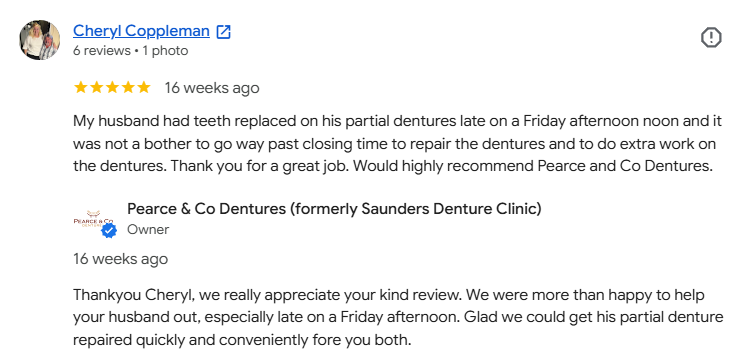
Pearce & Co Dentures is a Launceston based denture clinic (formerly Saunders Denture and Mouthguard Clinic) led by David Pearce, a qualified dental prosthetist. We handcraft and fit dentures onsite ourselves, so there is no external lab and no middleman between the person making your teeth and the person fitting them. We see people at 39A Brisbane Street, Launceston, and Ground Floor, 6 Gregory Street, Sandy Bay. Because we handcraft dentures onsite, relines and repairs are generally handled quickly, often with a same-day or overnight turnaround depending on the extent of the work.
If our dentures have started slipping or feeling loose, it’s worth getting them checked rather than working around it. Contact our Launceston clinic about a loose denture.